
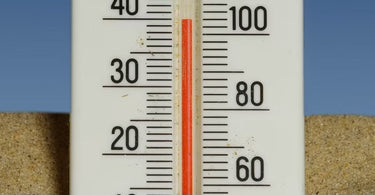
Seattle summers are dry, not humid. That's the whole selling point of July here after seven to eight months of rain. But dry doesn't mean comfortable at night, and if you've woken up sweating in your Capitol Hill brownstone apartment or a Wallingford craftsman, the mattress under you is a main factor.
Why Seattle homes get hot anyway
Most of Seattle's housing stock was built on the reasonable assumption that this city doesn't need air conditioning. Historically, that's quite accurate. Our summers have been heating up significantly in the last few decades (thanks global warming). But nowadays, for six or eight weeks in summer, the temperature rises. And a huge share of apartments and older single-family homes have no mechanical cooling at all. Heat builds up in a closed-up house all afternoon and has nowhere to go once the sun sets, especially in top-floor units and west-facing bedrooms that take direct sun through the evening.
Wildfire smoke makes this worse most summers now. On smokey days, opening windows to cool a room isn't really an option, so heat that would normally vent out overnight just sits in the room instead. Traditional memory foam compounds the problem on top of all that, because it molds tightly to your body and blocks airflow at the same time. That's just fine in a rainy February, but works against you on a smokey August night with the windows shut.
What actually cools a mattress
Mattress brand marketing copy throws around "cooling gel", "temperature regulating", and "chill" on almost every mattress package sold, and most of it doesn't hold up under any real test. Here's what actually matters. A hybrid coil design lets air move through the mattress instead of getting trapped inside a solid block of foam, and that structural difference does more for temperature than any surface treatment.
Gel-infused or copper-infused foam layers pull heat away from your skin rather than absorbing and holding it the way plain memory foam does. A breathable cover, something like Tencel or a specialty knit, helps release body heat at the surface rather than trapping it against your skin. Open-cell foam structures, where the foam itself is engineered with air channels instead of a dense closed structure, let heat escape even in layers that aren't coils.
The reality that mattress companies, and certainly most retailers, won't tell you is that a mattress does not "cool" you. There are products, like the Eight Sleep Pod, the Navien Sleep System, or the ChiliPad, that are active cooling mattress pads. Most of these a piping system throughout the pad to percolate water at set temperatures. They all are bought independently of your mattress, and they're pricy at $1500+ for a queen size.
But there are materials and mattress constructions that ARE better at sleeping cool than others. Let's take a look at what those are and what we have at The Drift you can actually test:
- Coils beat foam for airflow. Moving air pulls heat away from your body while dense foam traps it, which is why the WinkBed and the Helix Elite sleep cooler than an all-foam bed of the same firmness.
- Open-cell latex breathes on its own. Birch pairs latex with a wool layer that pulls moisture away from your skin instead of trapping it against you.
- Gel infusions delay heat, they don't dissipate it. Gel absorbs heat for the first hour or two, then saturates and stops helping.
- Phase change covers do the same trick as gel. The Brooklyn Bedding Aurora and ThermoBalance Elite feel cold at first touch, then even out once they've absorbed all the heat they can hold.
- Helix's GlacioTex cover keeps working past that point, built to keep pulling heat rather than just storing it.
- Copper and graphite infusions need somewhere for the heat to go. The Nolah Evolution conducts heat away from the body faster than plain foam, but it works best over an open construction underneath, not a solid slab of memory foam.
Quick wins if you're not ready to replace
If you're not ready to replace the whole mattress yet, there are real intermediate steps. Swap a plastic waterproof mattress protector for a breathable, moisture-wicking one — the plastic backing on most budget protectors is doing more to trap heat than any element of the mattress underneath it. Switch to linen or a lightweight, breathable cotton sheet set for the summer months specifically, even if you keep flannel or heavier cotton for winter. A cooling mattress topper placed on an aging all-foam mattress buys you real relief, though it's worth being honest that it doesn't fix the core airflow problem the way switching to a coil-based hybrid does. A topper masks the symptom. A structural change fixes the cause.
It's also worth checking what's happening in the room itself before assuming the mattress is the only variable. A ceiling fan pointed the right direction, blackout curtains that keep afternoon sun from baking a west-facing bedroom all day, and a mattress protector that actually breathes can meaningfully change how a room feels by 10pm, even before you touch the mattress. West-facing units in particular take the brunt of it, since the sun's still hitting the glass right through dinner in June and July.
When to actually replace it
Age matters more than people expect, too. A mattress that slept fine five years ago can start sleeping hotter over time, not because the materials changed but because foam compresses and loses some of its original loft, which reduces the airflow gaps that were part of the original design.
If your mattress is past the seven-year mark and you've only started noticing the heat problem recently, that's a real signal, not a coincidence. It's also worth timing a replacement ahead of summer rather than during the first heat wave, since delivery windows tend to stretch out once everyone in the city has the same idea at once. Late spring is the quiet window most people miss, and it's usually the easiest time to actually get a same-week delivery slot, well before the July rush hits everyone at once.
Come feel the difference between a hybrid and a traditional foam bed in person. It takes five minutes, and it tells you more about how you'll actually sleep in August than any spec sheet, review site, or cooling claim printed on a box.


